
• (+62721) 702022 (Hunting)
  • [email protected]
  • Youtube
  • Instagram
  • Facebook
  • Alumni
Bahasa IndonesiaID
  • EnglishEN
PENDAFTARAN
  • Beranda
  • Tentang
        • Tentang Teknokrat
          • Sejarah
          • Visi dan Misi
          • Yayasan Pendidikan Teknokrat
          • Rektor UTI
          • Pimpinan Universitas
          • Dosen Teknokrat
          • Profil UTI
          • Kebijakan Privasi
          • Kontak Kami
        • Beasiswa
          • Beasiswa KIP Kuliah
          • Beasiswa Yayasan
        • Kualitas
          • Akreditasi
          • Pusat Penjaminan Mutu
          • e-SPMI
          • Legalitas dan Pengakuan
          • Sistem Manajemen Gedung
        • Kolaborasi & Kemitraan
          • HEI Luar Negeri
          • Industri
          • Pemerintah
          • Kerjasama
          • Karier
        • Unit Penunjang
          • Pusat Inovasi & Kewirausahaan
          • Penelitian dan Pengabdian kepada Masyarakat
          • Pusat Karier & Pelatihan
          • Pusat Pengembangan Mahasiswa
  • Mengapa Teknokrat?
    • Internasionalisasi
    • Jalur Pengembangan Mahasiswa
    • Prestasi
    • Pusat Keunggulan
    • Jalur Karier
    • Komunitas Mahasiswa
    • Fasilitas
    • Peluang Lulusan
    • Alumni
  • Pendaftaran
    • Program Sarjana (S1)
      • Pendaftaran
      • Brosur
      • Kalender Penerimaan
      • Prosedur Penerimaan
      • Persyaratan Pendaftaran
      • Biaya Pendidikan
    • Program Magister (S2)
      • Pendaftaran
      • Brosur
      • Prosedur Penerimaan
      • Biaya Pendidikan
    • Program Internasional
      • Teknokrat Global Connect
  • Program
        • Fakultas Sastra dan Ilmu Pendidikan
          • Pendidikan Bahasa Inggris
          • Pendidikan Matematika
          • Pendidikan Olahraga
          • Sastra Inggris
        • Fakultas Ekonomi dan Bisnis
          • Manajemen
          • Akuntansi
        • Fakultas Teknik dan Ilmu Komputer
          • Sistem Informasi
          • Teknologi Informasi
          • Teknik Elektro
          • Teknik Komputer
          • Teknik Sipil
          • Informatika
        • Program Internasional
          • Teknokrat Global Connect
        • Program Magister
          • Magister Bahasa Inggris (S2)
          • Magister Ilmu Komputer (S2)
  • Berita
  • Layanan
        • Fasilitas Umum
          • Penerbit
          • Perpustakaan
          • Kemahasiswaan
          • Ensiklopedia Teknokrat
          • Kartu Teknokrat
          • Teknokrat Student Park
          • Teknokrat TV
          • Lapor Satgas PPKPT
          • Teknokrat Virtual View
          • Youtube Teknokrat
          • Uji Kompetensi
          • Layanan Disabilitas
        • Layanan Elektronik
          • Online Learning (SPADA)
          • Massive Open Online Courses (MOOCs)
          • Aplikasi e-Parent
          • e-Presensi Ormawa
          • e-Peminjaman
          • e-Certificate
          • e-Quality
          • e-Jurnal
          • Siakad
          • Cyber Security Team
          • Tracer Study
  • Pusat SDGs
  • Jaminan Mutu
PENDAFTARAN
  • EnglishEN
  • Bahasa IndonesiaID
  • Beranda
  • Tentang
    • Tentang Teknokrat
      • Sejarah
      • Visi dan Misi
      • Yayasan Pendidikan Teknokrat
      • Rektor UTI
      • Pimpinan Universitas
      • Dosen Teknokrat
      • Profil UTI
      • Kebijakan Privasi
      • Kontak Kami
    • Beasiswa
      • Beasiswa KIP Kuliah
      • Beasiswa Yayasan
    • Kualitas
      • Akreditasi
      • Pusat Penjaminan Mutu
      • e-SPMI
      • Legalitas dan Pengakuan
      • Sistem Manajemen Gedung
    • Kolaborasi & Kemitraan
      • HEI Luar Negeri
      • Industri
      • Pemerintah
      • Kerjasama
      • Karier
    • Unit Penunjang
      • Pusat Inovasi & Kewirausahaan
      • Penelitian dan Pengabdian kepada Masyarakat
      • Pusat Karier & Pelatihan
      • Pusat Pengembangan Mahasiswa
  • Mengapa Teknokrat?
    • Internasionalisasi
    • Jalur Pengembangan Mahasiswa
    • Prestasi
    • Pusat Keunggulan
    • Jalur Karier
    • Komunitas Mahasiswa
    • Fasilitas
    • Peluang Lulusan
    • Alumni
  • Pendaftaran
    • Program Sarjana (S1)
      • Pendaftaran
      • Brosur
      • Kalender Penerimaan
      • Prosedur Penerimaan
      • Persyaratan Pendaftaran
      • Biaya Pendidikan
    • Program Magister (S2)
      • Pendaftaran
      • Brosur
      • Prosedur Penerimaan
      • Biaya Pendidikan
    • Program Internasional
      • Teknokrat Global Connect
  • Program
    • Fakultas Sastra dan Ilmu Pendidikan
      • Pendidikan Bahasa Inggris
      • Pendidikan Matematika
      • Pendidikan Olahraga
      • Sastra Inggris
    • Fakultas Ekonomi dan Bisnis
      • Manajemen
      • Akuntansi
    • Fakultas Teknik dan Ilmu Komputer
      • Sistem Informasi
      • Teknologi Informasi
      • Teknik Elektro
      • Teknik Komputer
      • Teknik Sipil
      • Informatika
    • Program Internasional
      • Teknokrat Global Connect
    • Program Magister
      • Magister Bahasa Inggris (S2)
      • Magister Ilmu Komputer (S2)
  • Berita
  • Layanan
    • Fasilitas Umum
      • Penerbit
      • Perpustakaan
      • Kemahasiswaan
      • Ensiklopedia Teknokrat
      • Kartu Teknokrat
      • Teknokrat Student Park
      • Teknokrat TV
      • Lapor Satgas PPKPT
      • Teknokrat Virtual View
      • Youtube Teknokrat
      • Uji Kompetensi
      • Layanan Disabilitas
    • Layanan Elektronik
      • Online Learning (SPADA)
      • Massive Open Online Courses (MOOCs)
      • Aplikasi e-Parent
      • e-Presensi Ormawa
      • e-Peminjaman
      • e-Certificate
      • e-Quality
      • e-Jurnal
      • Siakad
      • Cyber Security Team
      • Tracer Study
  • Pusat SDGs
  • Jaminan Mutu
  • Home
  • Sastra
Linguistik Sistemik Fungsional Author Pic

Getting to Know the Flow of Functional Systemic Linguistics

  • Posted by
  • Date 13/11/2021
  • Categories Sastra

What is Functional Systemic Linguistics?

The flow of Systemic Functional Linguistics (LSF) was first introduced by a linguist, M.A.K Halliday in the 1960s in England. This flow of linguistics is a linguistic theory that was formed based on an authentic description of the use of language in society. Systemic and functional words are important keywords in the flow of Functional Systemic Linguistics. The word systemic refers to a system of options or choices in the use of language, for example whether a clause in a communication event indicates a declarative or indicative clause, and whether it is active or passive. On the other hand, the functional word has meaning if the language lies in the context of use in carrying out its function. For this reason, LSF is a linguistics that is concerned with the selection of language forms in the context of using language as text.

Functional Grammar And. formal

Functional grammar is often contrasted with formal grammar. Functional grammar refers to the school of linguistics pioneered by M. A. K Halliday. On the other hand, formal grammar refers to the type of formal linguistics pioneered by Noam Chomsky, an American linguist. Furthermore, functional groups are rooted in traditions that interpret rhetoric and ethnography. On the other hand, formal groups are rooted in traditions that interpret language as a form with an orientation to logic and philosophy.

Principles of Functional Systemic Linguistics

There are several principles in Functional Systemic Linguistics including:

  1. LSF views language as a source of meaning (a resource for meaning) rather than as a system of rules (a system of rules);
  2. LSF has more to do with text than clauses or sentences;
  3. LSF focuses on the solidarity relationship between texts and social contexts;
  4. LSF is concerned with language which is seen as a system for interpreting meaning.
  5. LSF is oriented towards developing a model that language, natural life and everything is seen as a semiotic communication framework.
  6. LSF views that each element of language can only be explained by referring to the function of that element in the overall linguistic system.
  7. LSF is based on the fact that a clause is part of a sentence.

In LSF’s view, there are three types of meaning in a clause, namely textual meaning, interpersonal meaning, and ideational meaning. These three meanings are then called metafunctional meanings.

Three Metafunctional Meanings in LSF

As explained earlier, the clause becomes a source of meaning that represents experience (ideational), becomes a source of meaning in exchanging meaning (interpersonal), and becomes a source of meaning in conveying messages (textual). This can be illustrated in the following figure.
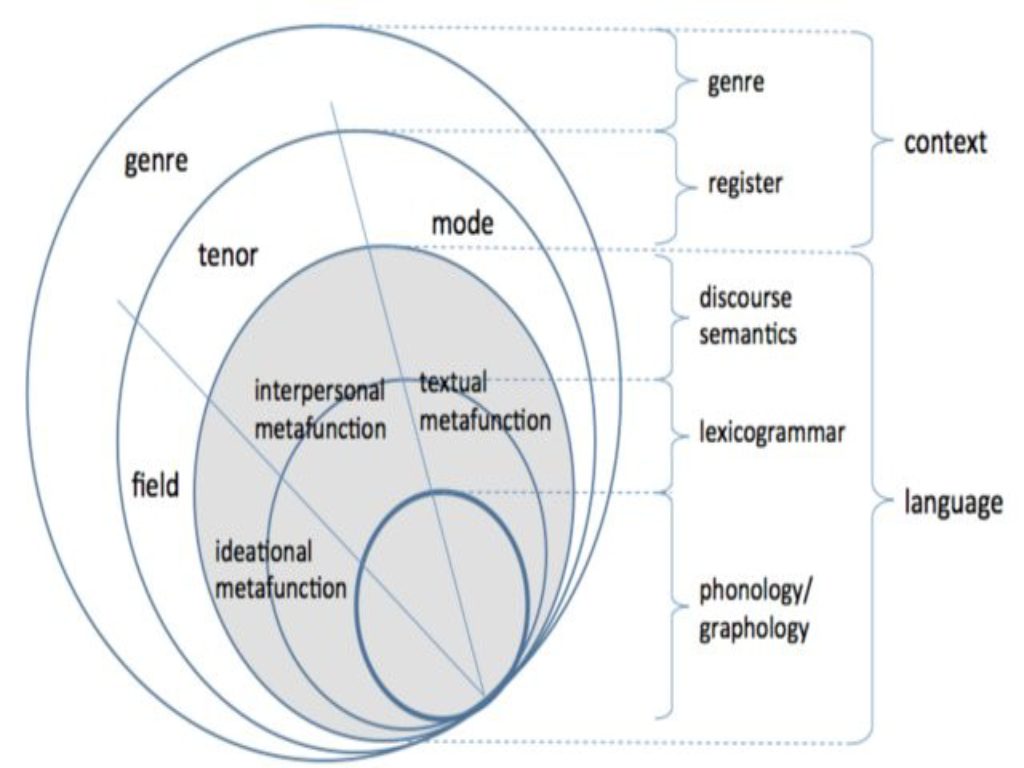
Sumber : Jing Hao (2020)

1.    Clauses as a Representation of Experience (Ideational)

In this type of meaning, the clause is seen as a source of meaning used to represent experience (Halliday, 1994). The ideational meaning can be broken down into experiential meaning and logical meaning. The ideational meaning associated with experiential meaning is associated with various types of processes within the framework of the linguistic system or what is called transitivity (Halliday, 1994).

FACULTY OF LITERATURE AND EDUCATIONAL SCIENCES

READ MORE HERE

2.    Clauses as Exchange of Meaning (Interpersonal)

This type of clause as an exchange of meaning, the clause is seen as a source of meaning that serves to organize the process of interaction between the writer/speaker and the reader/listener (Halliday, 1994). This is realized in the Mood system.

3.    Clause as Message (Textual)

This type of clause is a source of meaning used to organize information or messages (Halliday, 1994). In communicating, utterances are uttered in the form of clauses. The clause contains an arrangement of information distribution, and information that is considered more important is usually prioritized by placing it at the front of the clause (theme), while the part that is followed is the part that completes the information that has been previously submitted (Rema).

  • Share:
author avatar

Previous post

Minimizing Flooding by Making Biopori
13/11/2021

Next post

MATHEMATICS MODELING CALCULATOR INTERPOLATION WITH WOLFRAMALPHA
13/11/2021

Pos-pos Terbaru

  • PEMBEKALAN ASISTEN DOSEN ! Wakil Rektor Teknokrat: Akreditasi Unggul Harus Berdampak Nyata bagi Mahasiswa
  • KEREN !! Universitas Teknokrat Indonesia Kenalkan Teknologi Robotika kepada Siswa SMKS Nusantara Pesawaran, Tiga Robot Berhasil Dirakit
  • HITEKMASI Teknokrat Gelar Team Building Camp, Cetak Mahasiswa yang Unggul dan Berjiwa Kepemimpinan
  • KEREN !! HIMA Akuntansi Universitas Teknokrat Indonesia Gelar Team Building Camp, Perkuat Kepemimpinan dan Solidaritas Mahasiswa
  • MEMBANGGAKAN !! Harumkan Nama Kampus di Tingkat Nasional, Tim Tapis Berseri Universitas Teknokrat Indonesia Raih Juara I Sandi Yudha Competition 2026
  • LUAR BIASA !! Libatkan 41 Organisasi Mahasiswa, Student Fest Technology and Art Expo 2026 Universitas Teknokrat Indonesia Jadi Wadah Pengembangan Potensi Mahasiswa
  • TEMBUS 4 BESAR NASIONAL !! Universitas Teknokrat Indonesia Loloskan 21 Produk Inovasi ke KSTI 2026 Mengungguli Beberapa Kampus Top di Indonesia
  • LUAR BIASA !! Duta Teknokrat 2026 Lahirkan Generasi “Progressive Patriots”, Siap Jadi Pemimpin Muda Berkarakter dan Menginspirasi
  • MENDUNIA !! Rektor Universitas Teknokrat Indonesia Ditetapkan sebagai Chair Professor di Dua Universitas Korea Selatan

Kontak

  • Universitas Teknokrat Indonesia
  • Jl. Zainal Abidin Pagaralam, No.9-11 Labuhan Ratu, Kota Bandar Lampung Provinsi Lampung, 35132
  • (+62721) 702022 (Hunting)
  • +62 822-7992-0145 (Khusus Chat)
  • [email protected]

Unit dan Layanan Pendukung

  • Perpustakaan
  • Kemahasiswaan
  • Penjaminan Mutu
  • Pusat Karier dan Pelatihan
  • Pusat Inkubator Bisnis
  • Satgas PPKPT Teknokrat

Layanan Akademik dan Digital

  • Sistem Informasi Akademik
  • Pembelajaran Daring (SPADA)
  • Uji Kompetensi Berbasis Komputer
  • Jurnal Elektronik
  • e-Parent (Portal Orang Tua Mahasiswa)
  • Sertifikat Elektronik
  • Alumni dan Tracer Study

Penerimaan Mahasiswa Baru

  • Daftar Sekarang
  • Informasi Biaya Kuliah
  • Informasi Beasiswa
Facebook-f Instagram Youtube

Copyright Themes © 2022

Copyright Themes © 2022

Copyright Themes © 2022

Copyright Themes © 2022

Copyright Themes © 2022