OUTSTANDING ALUMNI! Universitas Teknokrat Indonesia Electrical Engineering Graduate Builds a Career as a CCR Operator at Sebalang Coal-Fired Power Plant, Demonstrating Industry Readiness
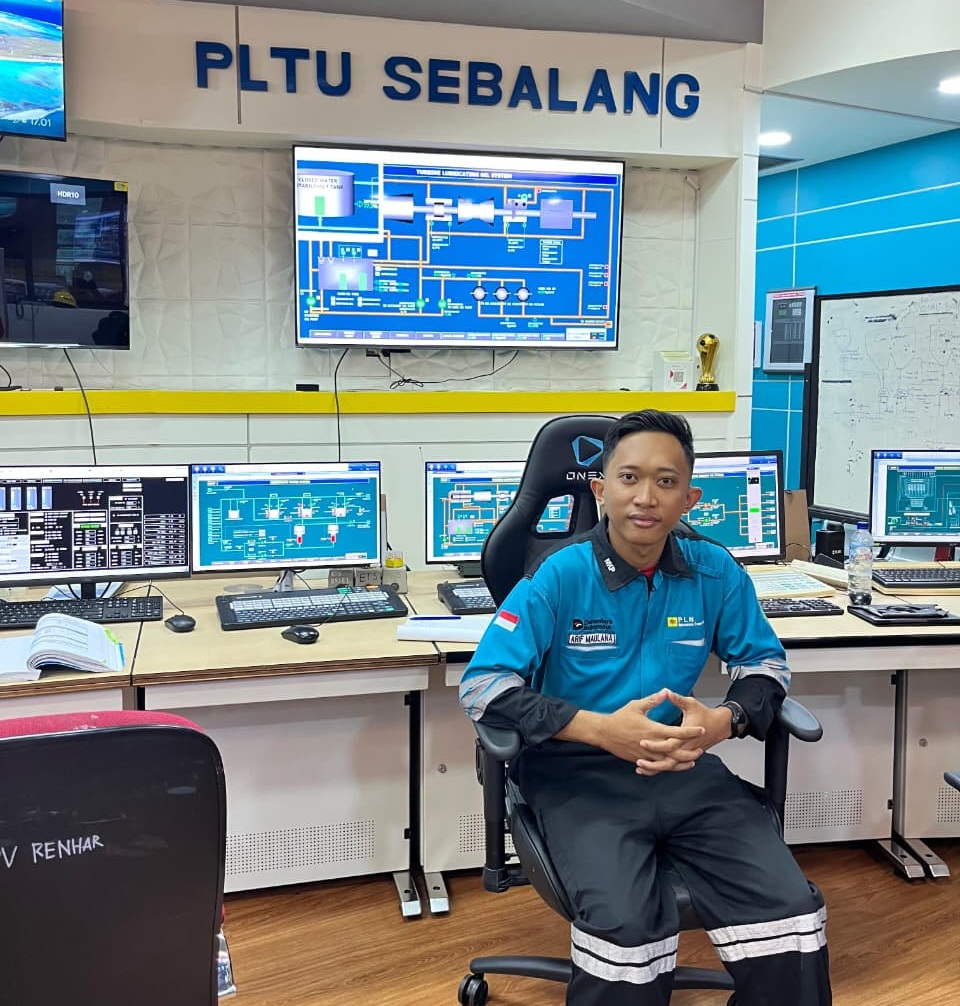
Bandar Lampung – Universitas Teknokrat Indonesia, recognized as one of Lampung’s leading Impactful Campuses, continues to demonstrate the quality of its graduates through their achievements in the industrial sector. One such graduate is Arif Maulana, S.T., an alumnus of the Undergraduate Electrical Engineering Study Program who is now pursuing his professional career as a Central Control Room (CCR) Operator at Sebalang Coal-Fired Power Plant (PLTU Sebalang) in South Lampung Regency, Lampung Province.
Arif’s career in the electricity sector demonstrates how an education that integrates theory, practical learning, organizational experience, and competency development can provide students with an important foundation for entering the professional world.
Sebalang Power Plant is a coal-fired steam power plant owned by PT PLN (Persero) and located in South Lampung Regency. As a CCR Operator, Arif is responsible for monitoring, controlling, and operating the plant’s main systems and equipment from the central control room.
Laboratory Experience Provides a Foundation for Industrial Careers
Arif explained that the knowledge he gained while studying in the Undergraduate Electrical Engineering Study Program at Universitas Teknokrat Indonesia has been an important foundation for his current role.
According to him, laboratory practice provided practical insights into the application of electrical engineering principles, allowing students not only to understand theoretical concepts but also to become familiar with various technical activities.
“Alhamdulillah, I have been able to work at Sebalang Power Plant as a CCR Operator. The knowledge I gained at university has been very useful, especially the experience I gained through laboratory practice. That experience became an important foundation when I entered the industrial sector,” Arif said.
He believes that the practice-based learning he received during his studies helped him adapt to a professional environment that demands precision, discipline, technical competence, and a high level of responsibility.
Active Organizational Involvement Develops Leadership Skills
In addition to participating in academic activities, Arif took advantage of his university years to develop his abilities through student organizations.
During his studies, he was entrusted with the position of Vice Chairman of the Electrical Engineering Student Association (HIMA S-1 Teknik Elektro). This experience provided opportunities to learn about leadership, communication, coordination, and teamwork.
According to Arif, organizational involvement offered valuable advantages when entering the industrial sector, where work in a power plant requires structured coordination and collaboration with various parties.
“My organizational experience helped shape my character, particularly in leadership and teamwork. These skills have been very useful when communicating and working with colleagues in the industrial environment,” he explained.
Lecturers and Campus Facilities Support Career Readiness
Arif also expressed his appreciation for the academic environment at Universitas Teknokrat Indonesia, which he believes provided valuable support throughout his studies.
He noted that lecturers in the Undergraduate Electrical Engineering Study Program offered guidance and support that helped students understand course materials and participate in practical learning activities.
“The lecturers in Electrical Engineering are very supportive and always willing to help. Teknokrat also has comprehensive facilities, ranging from laboratories and practical training rooms to other academic support facilities,” he said.
Arif added that the alignment between university learning and workplace requirements also helped him when he entered the industrial sector.
“The university curriculum is also aligned with workplace requirements, so we were not too surprised when we entered the industry,” he added.
University Encourages Competent and Work-Ready Graduates
Vice Rector for Student Affairs and Alumni of Universitas Teknokrat Indonesia, Auliya Rahman Isnain, S.Kom., M.Cs., expressed his appreciation for Arif Maulana’s achievement in building a career in the national energy sector.
According to him, alumni success is one indicator that the competencies developed during university studies can be applied in the professional world.
“We are proud to see Universitas Teknokrat Indonesia alumni competing successfully and working in the national energy industry. This demonstrates that Teknokrat graduates possess the competencies required by employers and can adapt to industrial demands,” Auliya stated.
He hopes Arif’s professional journey will motivate Electrical Engineering students and other Universitas Teknokrat Indonesia students to continue strengthening their competencies and make the most of the facilities and personal development opportunities available during their studies.
Mahathir: Curriculum Continues to Align with Industry Needs
Vice Rector of Universitas Teknokrat Indonesia, Dr. H. Mahathir Muhammad, S.E., M.M., also expressed his pride in the achievements of the Electrical Engineering alumnus.
He emphasized that Universitas Teknokrat Indonesia continues to develop an educational system that remains relevant to changes in the workplace, including through curriculum evaluation and the improvement of practical learning facilities.
“Teknokrat is committed to producing outstanding, professional, and work-ready graduates. We continuously evaluate our curriculum to ensure it aligns with industry needs. We also continue improving our laboratory and practical training facilities so students can gain hands-on experience before entering the professional world,” Mahathir stated.
He explained that hands-on learning through laboratory activities, practical training, organizational involvement, and other competency development programs plays an important role in preparing graduates who possess not only academic knowledge but also professional readiness.
Electrical Engineering Education Supports the Energy Sector
Arif’s career as a CCR Operator at Sebalang Power Plant also highlights the relevance of Electrical Engineering education to the needs of the electricity industry.
Electrical engineering competencies can be applied across various sectors that require professionals with technical and analytical abilities, discipline, and teamwork skills.
The presence of university graduates in the energy sector represents one way higher education institutions contribute skilled human resources to support national industrial needs. At the same time, alumni experiences in the workplace can inspire students to prepare their competencies while still at university.
Supporting the Sustainable Development Goals
Arif Maulana’s success in building a career in the electricity sector aligns with Universitas Teknokrat Indonesia’s contributions to the Sustainable Development Goals (SDGs), particularly:
SDG 4 – Quality Education, through the development of academic competencies and practice-based learning.
SDG 7 – Affordable and Clean Energy, through the preparation of skilled human resources capable of contributing to the energy and electricity sectors.
SDG 8 – Decent Work and Economic Growth, through career-oriented education that strengthens graduates’ professional readiness and competitiveness in the industrial sector.
Through its alumni achievements, Universitas Teknokrat Indonesia continues to strengthen its commitment as a higher education institution that not only provides academic education but also equips students with practical skills, organizational experience, professional competencies, and the ability to adapt to the changing demands of the workplace.
Arif Maulana’s career at Sebalang Power Plant serves as an inspiration, demonstrating that an educational process supported by practical learning, adequate facilities, lecturer guidance, and organizational experience can provide a strong foundation for professional success.
Universitas Teknokrat Indonesia will continue striving to develop excellent lecturers, outstanding students, and highly competent graduates who can make meaningful contributions to industry, society, and Indonesia’s national development.